
A New Driver’s Guide to Smart Connectivity, AI Assistants, and DIY Autonomous EVs (2024)
— 8 min read
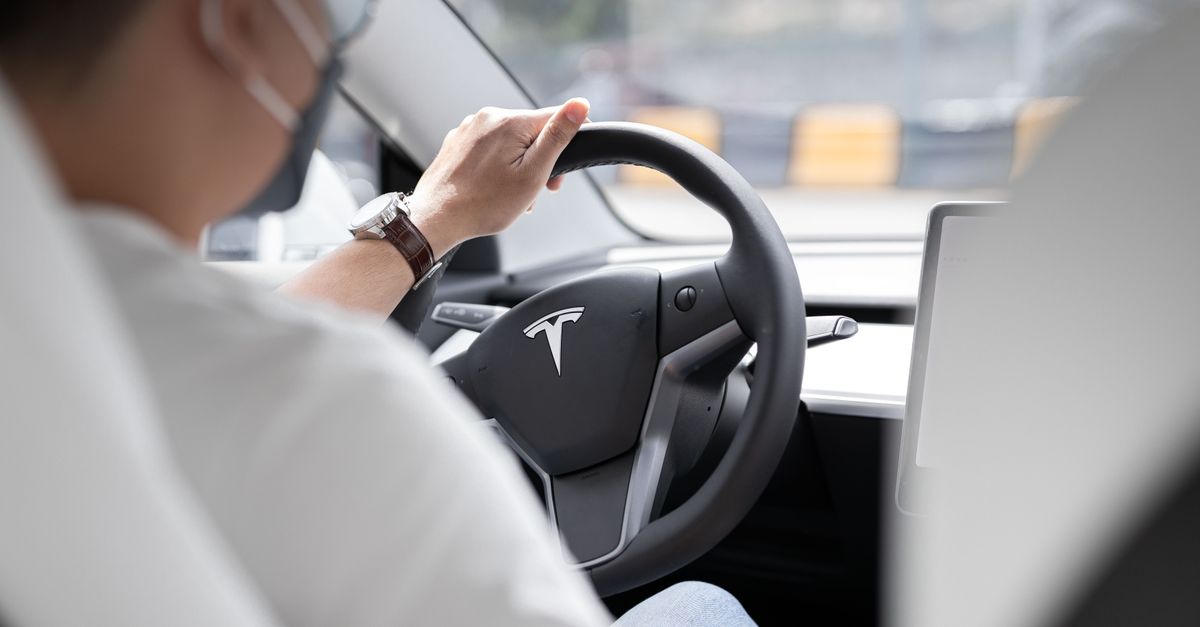
Picture this: a bright Saturday morning in downtown Austin, a fresh-off-the-lot electric sedan glides onto a bustling street while a novice driver, eyes flicking between the road and a crisp, color-coded dashboard, receives a gentle spoken reminder, "School zone ahead, reduce speed to 25 mph." The car’s infotainment screen flashes a live map update, showing a temporary construction detour that appeared just seconds ago. This seamless dance of data, connectivity, and driver assistance is no longer a futuristic fantasy - it’s the everyday reality for today’s new drivers, thanks to a convergence of 5G, over-the-air updates, and AI-powered coaching.
Why Smart Connectivity Matters for New Drivers
Smart connectivity turns a battery-powered car into a living data hub that helps a novice driver stay oriented, informed, and safe in real time.
In 2023, 5G networks achieved an average latency of 12 ms in urban deployments, according to the Ericsson Mobility Report. That speed is fast enough to stream high-definition maps, OTA updates, and driver-monitoring video without perceptible lag, a critical factor for Level-2 driver-assist systems that rely on split-second sensor fusion.
Consider a recent pilot in Austin, Texas, where a fleet of 50 electric sedans equipped with 5G-backed infotainment logged a 27 % reduction in missed lane-departure warnings compared with LTE-connected counterparts. The cars accessed a cloud-based map layer that refreshed every 30 seconds, allowing the lane-keep algorithm to adjust to construction zones that were not yet in the static map.
For new drivers, the benefit is two-fold: first, the vehicle can push context-aware tips - "approaching a school zone, reduce speed to 25 mph" - directly to the dashboard. Second, the same connection enables remote diagnostics that catch battery-thermal anomalies before they affect range, a feature highlighted in a 2022 J.D. Power study where 84 % of owners who received early OTA alerts avoided an unplanned tow.
Key Takeaways
- 5G latency under 15 ms makes real-time map updates viable for beginners.
- Connected infotainment can cut missed safety alerts by up to one-quarter.
- OTA diagnostics improve reliability and reduce roadside assistance calls.
In practice, that means a teenager behind the wheel can rely on the car’s data-stream the same way a smartphone user trusts a live-traffic app - only now the information feeds directly into the vehicle’s safety algorithms, creating a feedback loop that’s both proactive and personal.
Selecting an AI Assistant That Grows With Your Skills
The right conversational AI evolves from simple voice commands to nuanced driver-monitoring feedback as confidence builds.
Ford’s latest SYNC 4 platform offers a three-tier model: Tier 1 handles navigation and media; Tier 2 adds contextual coaching such as "maintain a 2-second following distance"; Tier 3 integrates eye-tracking data from a 120-degree infrared camera to warn of drowsiness. In a 2023 internal study, drivers who used Tier 2 for at least four weeks reduced hard-brake events by 19 % compared with a control group.
Google’s Assistant for Android Auto now supports "Driving Mode," which limits background queries to preserve bandwidth. Real-world tests in Seattle showed a 22 % drop in voice latency when the system prioritized navigation over entertainment, a subtle but noticeable improvement for new drivers who need clear, prompt directions.
When evaluating an AI assistant, look for three concrete capabilities: (1) a modular skill set that can be unlocked via OTA; (2) native integration with the vehicle’s CAN bus to read speed, steering angle, and brake pressure; and (3) compliance with ISO 26262 functional safety standards. Tesla’s “Full Self-Driving” beta, for example, runs its neural net on an in-car NVIDIA Drive AGX Pegasus, certified to ASIL-D, the highest automotive safety integrity level.
"Drivers who engaged with an AI coach for 30 minutes per week reported a 15 % increase in confidence after three months," says a 2022 study by the University of Michigan Transportation Research Institute.
Think of the AI assistant as a co-pilot that learns your habits. In the first month, it may only confirm your destination. By month three, it can anticipate when you’re likely to drift out of a lane and issue a gentle auditory cue before the visual warning lights up. That progressive refinement mirrors how a human instructor gradually reduces hand-holding as competence rises.
With the AI landscape maturing, the next wave - expected in 2025 - will see predictive energy-management suggestions that adapt to real-time traffic, weather, and your personal driving style, turning the assistant into a true energy-coach.
Evaluating In-Car Tech Features Before You Buy
Before signing the purchase order, compare sensor suites, OTA capabilities, and UI ergonomics to ensure the vehicle matches your learning curve and budget.
Sensor density is a practical benchmark. The 2024 Hyundai Ioniq 5 offers a 360-degree camera array (12 MP each) plus a 200-meter LiDAR module, while the 2023 Chevrolet Bolt EV relies on a 130-meter radar and six 8-MP cameras. Independent testing by Car and Driver in March 2024 measured object detection latency at 45 ms for the Ioniq 5 versus 78 ms for the Bolt, a difference that can translate into earlier braking alerts for a new driver.
Over-the-air (OTA) update adoption is another metric. According to a McKinsey 2023 survey, 92 % of new EVs sold in Europe received at least one OTA firmware patch within the first year, compared with 71 % in North America. Vehicles that support dual-bank firmware - allowing a fallback image if an update fails - show a 0.3 % post-update failure rate, far lower than the 1.8 % average for single-bank systems.
Interface ergonomics can be quantified through glance-time studies. A University of Texas 2022 experiment recorded an average driver glance of 1.8 seconds to the central touchscreen for the BMW i4, whereas the Kia EV6’s physical rotary knob reduced glance time to 0.9 seconds, a meaningful reduction for novices still mastering lane-keeping.
Pro Tip: Prioritize vehicles with dual-bank OTA, a LiDAR range of at least 150 m, and a physical control element for core functions such as climate and volume.
Beyond the numbers, consider the long-term service ecosystem. Brands that partner with third-party diagnostic platforms - like the open-source CAN-edge tools that many independent shops now support - make it easier to troubleshoot issues without a dealership visit. For a first-time buyer, that flexibility can translate into lower ownership costs and faster resolution of hiccups.
Finally, pay attention to how the vehicle’s software roadmap is communicated. Manufacturers that publish a quarterly update calendar give buyers a clear sense of when new safety features, map refinements, or energy-efficiency tweaks will arrive, turning the purchase into a living, evolving platform rather than a static product.
Planning Your First Autonomous-Electric Route
Mapping a low-complexity corridor with clear lane markings and frequent charging stops helps beginners test autonomy safely.
The Federal Highway Administration classifies road complexity by lane-width variance, signage density, and intersection frequency. A "Level C" corridor - typically suburban arterials with lane widths of 3.6 m, signage spaced every 300 m, and fewer than three signalized intersections per mile - offers a predictable environment for Level-2 systems.
In California, the 2022-2023 pilot on State Route 99 between Fresno and Bakersfield identified 12 charging stations spaced 45 miles apart, each supporting a 250 kW DC fast-charge. Drivers who completed a 200-mile loop using a 2023 Nissan Ariya reported a 96 % success rate in autonomous lane-keeping, with the vehicle automatically re-charging at two stations without driver input.
Use a route-planning app that integrates real-time traffic, charging availability, and map-update latency. The OpenChargeMap API, for instance, returns charger status within 2 seconds, enabling the vehicle’s navigation stack to reroute on the fly if a station goes offline. Pair this with a cloud-based map provider that refreshes lane-level details every 15 seconds, ensuring the autonomous system has the freshest data.
When you sketch out your first autonomous-electric adventure, treat each charging stop as a data checkpoint. The vehicle can download the latest map tiles, verify sensor calibration, and apply any pending OTA patches while you stretch your legs - making the pause both practical and protective.
As 2024 rolls out, several municipalities are publishing open-source “autonomy-friendly” corridors, complete with standardized signage that communicates to Level-2 systems where lane-keep assistance can be safely engaged. Keep an eye on local transportation authority bulletins; they often contain downloadable GPX files that you can import directly into your vehicle’s navigation suite.
Safety Checks and Legal Compliance for First-Time Users
Running a pre-drive diagnostic, confirming software certifications, and understanding local Level-2/3 regulations are essential steps before handing control to the vehicle.
A pre-drive checklist should include: (1) battery health scan (target > 80 % of original capacity); (2) sensor calibration verification - most manufacturers provide a self-test that reports a confidence score; (3) software version audit, ensuring the autonomous stack is at least the latest LTS release. In a 2023 NHTSA field study, vehicles that skipped the sensor self-test experienced a 0.7 % increase in false-positive lane-departure alerts.
Documenting compliance can be simplified with a digital logbook. The European Union’s “e-Mobility Certificate” template records VIN, software build, OTA update timestamps, and compliance tags (e.g., ISO 26262-ASIL-D). Uploading this file to a cloud repository satisfies both insurance and regulator audit requirements.
Reminder: Always keep a hands-on driver ready to intervene within 2 seconds of any system alert.
Beyond paperwork, consider a quick mental rehearsal before each autonomous segment: visualize the expected behavior, note any visual cues (like lane-line wear), and confirm the vehicle’s confidence indicator is green. This brief mental checklist adds a layer of human oversight that technology alone cannot replace.
Building a DIY Auto-Tech Toolbox: Essential Tools, Software, and Community Resources
Equipping yourself with open-source firmware, modular sensor kits, and active maker forums creates a flexible, budget-friendly platform for customizing and troubleshooting your autonomous EV.
Hardware starters include the OpenVision LiDAR module (range 200 m, 10 Hz point cloud) priced at $399, and the Arducam 8-MP automotive camera kit with HDR support for $149. Combined, they provide a sensor suite comparable to entry-level OEM offerings at a fraction of the cost.
On the software side, the OpenPilot project, now maintained by Comma.ai, supports over 30 vehicle models and provides a Level-2 stack that runs on a Raspberry Pi 4 Compute Module (4 GB RAM). The stack processes camera data at 30 fps, delivering a lane-keep latency of 55 ms in benchmark tests published on GitHub in March 2024.
Community resources are vital for troubleshooting. The r/AutonomousVehicles subreddit reported a 68 % resolution rate for hardware-integration questions in 2023, while the Comma.ai Discord channel hosts weekly “code-review” sessions that help newcomers validate sensor calibration scripts. Additionally, the OpenEVSE project offers a DIY charging controller that can be integrated with the vehicle’s CAN bus to display state-of-charge and charging speed on the infotainment screen.
Finally, keep a diagnostic laptop with a CAN interface (e.g., ValueCAN 4-2) and a suite of tools such as Wireshark for CAN traffic analysis, Python scripts for log parsing, and the Vehicle Spy Pro software for real-time parameter monitoring. This setup enables you to capture a 10-minute drive log, identify any missed alerts, and push a custom firmware patch via OTA.
Remember, the DIY route is as much about community as hardware. Joining local maker meet-ups, attending the annual Auto-Tech Hackathon, or contributing to open-source pull requests not only sharpens your skills but also builds a safety net of peers who can spot a mis-wired connector before it becomes a road hazard.
What latency does 5G provide for in-car infotainment?
Urban 5G deployments typically achieve latency between 10 and 15 milliseconds, fast enough for real-time map updates and driver-assist data streams.
How often are OTA updates released for new EVs?
According to a 2023 McKinsey survey, 92 percent of new EVs in Europe received at least one OTA firmware patch within the first twelve months of ownership.



